
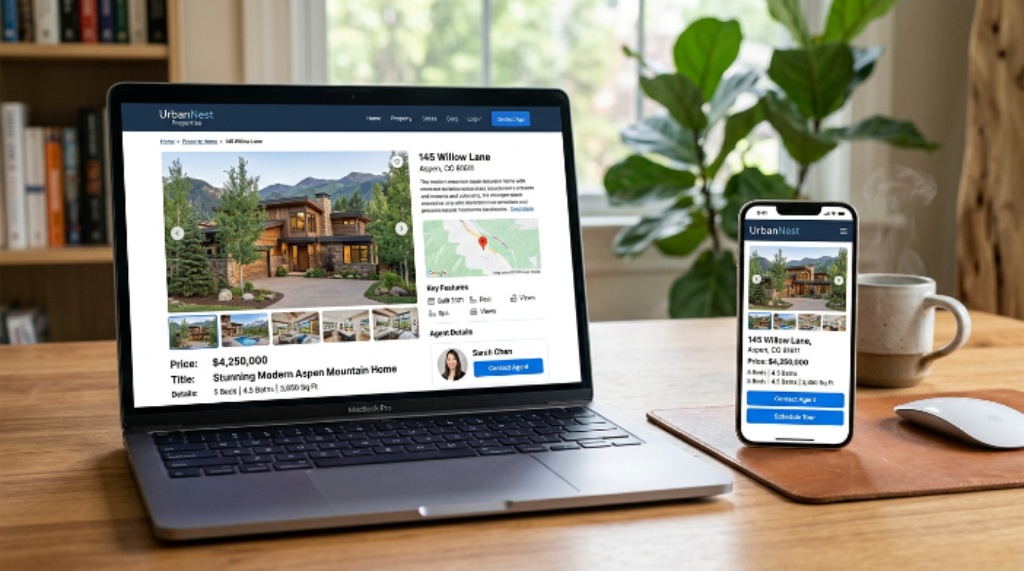
You spent time building your real estate website. You have listings, contact forms, and maybe even a blog. However, buyers are still choosing your competitors. They browse your site, then leave. They never call. They never fill out the form. They simply disappear.
This is one of the most frustrating problems in real estate today. The good news is that it is almost always fixable. The bad news is that most agents and brokers do not know where to start. This article shows you exactly where the problem begins and what to fix first.
The Real Reason Buyers Leave Your Website
Most real estate professionals assume buyers leave because of price or inventory. That assumption is wrong. Research consistently shows that most buyers leave a website because of poor user experience. They cannot find what they need quickly. The site loads too slowly. The search tools do not work well on a phone. The listings look outdated.
Buyers in today’s market are impatient. They expect information instantly. If your site takes more than three seconds to load, a significant portion of visitors will leave before seeing a single listing. Additionally, if the design looks dated or cluttered, buyers associate that impression with your brand and your service.
Therefore, the first thing to fix is not your content or your listings. It is the experience your website delivers the moment someone arrives.
Website Speed Is Not Optional
Page speed is the single biggest driver of bounce rate on real estate websites. Every extra second of load time costs you visitors and leads. Google research shows that as page load time increases from one second to three seconds, the probability of a visitor bouncing increases by 32 percent.
Real estate websites are particularly vulnerable to speed problems. High-resolution listing photos, interactive maps, and video tours all add weight to a page. Without proper optimization, these elements turn a promising website into a slow one.
| Load Time | Bounce Rate Impact |
| 1 second | Benchmark — low bounce rate |
| 3 seconds | 32% higher chance of bounce |
| 5 seconds | 90% higher chance of bounce |
| 10 seconds | 123% higher chance of bounce |
Here is what slows most real estate websites down:
- Uncompressed listing photos uploaded at full resolution
- Too many third-party plugins and widgets running at once
- No content delivery network in place for faster global loading
- Embedded video that auto-plays without proper lazy loading
- A web hosting plan that cannot handle moderate traffic
Fixing speed does not require rebuilding your entire site. Compressing images, removing unused plugins, and upgrading your hosting plan often produce dramatic improvements within days.
Mobile Experience Determines Whether You Win or Lose
More than 70 percent of home buyers use a mobile device during their property search. If your real estate website is difficult to use on a phone, you are losing the majority of your potential leads before they ever speak to you.
Mobile problems on real estate websites tend to fall into a few common categories. Text is too small to read without zooming in. Buttons are placed too close together and difficult to tap accurately. Contact forms require too many fields and feel tedious on a touchscreen. Listing photos do not display correctly on smaller screens.
Additionally, mobile search behavior is different from desktop. Mobile users search in shorter bursts. They want to see listings quickly, filter by price and location with minimal effort, and contact an agent with one tap. A real estate website that forces mobile users through multiple steps to find a property loses them every time.
Run a mobile-friendliness test on your site today. Google offers a free tool for this. If your site fails or shows warnings, prioritize fixing it above everything else. A mobile-first website is not a luxury in 2026. It is a requirement.

Your Listing Pages Are Probably Underperforming
Most real estate websites treat listing pages as simple data displays. Address, price, beds, baths, square footage, and a gallery of photos. That format was fine ten years ago. Today, buyers expect more, and your competitors are delivering it.
High-performing listing pages include several elements that basic pages lack. Here is a comparison of what underperforming and high-performing listing pages typically look like.
| Element | Underperforming Page | High-Performing Page |
| Photos | 5 to 8 static images | 20-plus professional photos with virtual tour |
| Description | Basic features list | Narrative description with lifestyle context |
| Neighborhood Info | Not included | Schools, walkability, nearby amenities |
| Video | Not included | Walkthrough video or drone footage |
| Call to Action | Generic contact form | Schedule a showing button with real availability |
| Map | Static image | Interactive map with nearby points of interest |
| Mobile Display | Inconsistent | Fully optimized for all screen sizes |
Each of these elements adds context and confidence. Buyers make emotional decisions. A listing page that helps them imagine living in a property converts significantly better than one that simply lists facts.
Therefore, audit your top ten listing pages today. Identify which elements are missing. Start adding them, beginning with professional photos and a clear call to action.
Lead Capture Is Where Most Agents Leave Money on the Table
Getting a visitor to your site is only half the battle. Capturing that visitor as a lead is the other half. Most real estate websites make this far harder than it needs to be.
The most common lead capture mistake is a single generic contact form buried at the bottom of a page. Buyers who are not yet ready to speak with an agent will not fill it out. However, they may be willing to take a smaller step if you offer one.
Effective lead capture on a real estate website uses multiple entry points, each matched to a different stage of the buyer journey.
- A home valuation tool for sellers and curious homeowners
- A saved search feature that emails new listings matching a buyer’s criteria
- A downloadable neighborhood guide in exchange for an email address
- A mortgage calculator with a follow-up prompt to speak with a lender partner
- A simple chatbot or live chat option for visitors who have quick questions
Additionally, the placement of these tools matters. They should appear near the top of the page, within listing content, and at natural pauses in the browsing experience. Waiting until the bottom of a page to ask for contact information means most visitors never see the ask at all.
Trust Signals That Buyers Look For Before They Contact You
Before a buyer fills out any form or picks up the phone, they assess whether they can trust you. Your real estate website either builds that trust or fails to establish it. Most sites do not place enough emphasis on trust signals.
Trust signals are elements on your website that give buyers confidence in your credibility and professionalism. They include:
- Verified client reviews and testimonials with real names and photos
- Recent sales data showing properties you have actually closed
- A professional headshot and an authentic personal bio
- Professional association logos such as NAR or local MLS memberships
- Media mentions or press features if applicable
- Clear privacy policy and secure site certificate
Additionally, response time matters. Buyers who submit a form and receive no response within a few hours often move on to another agent. Therefore, showing your typical response time prominently on your contact page sets expectations and builds confidence.
Search and Filtering Tools That Actually Work
A buyer’s ability to search and filter listings is one of the most critical functions of your real estate website. If the search tool is clunky, slow, or limited, buyers will leave and find a competitor whose site makes it easier.
The best real estate search experiences share several qualities. Filters load quickly and respond without requiring a full page refresh. Map-based searching allows buyers to draw a search area rather than just entering a zip code. Price sliders are easy to use on touchscreens. Results update in real time as filters change.
Many real estate websites rely on IDX feeds that are functional but poorly integrated. The search experience feels disconnected from the rest of the site. This creates friction. Friction kills conversions.
If upgrading your IDX solution is not immediately possible, focus on the most common search paths. Make sure filtering by price, bedrooms, and neighborhood works flawlessly on both desktop and mobile. Fix the most used paths first, then improve from there.

The Content That Keeps Buyers Coming Back
Most real estate websites publish content once and leave it. Buyers who are not yet ready to contact an agent still need a reason to return to your site. Consistent, useful content gives them that reason and keeps your website competitive in search rankings over time.
Content that works well for real estate websites includes:
- Neighborhood guides covering lifestyle, schools, and local character
- Monthly market reports showing average prices, days on market, and inventory trends
- First-time buyer guides that explain the process step by step
- Relocation guides for buyers moving from out of state
- Video walkthroughs of popular neighborhoods or recently sold properties
Additionally, content helps with search engine visibility. Buyers who are not yet ready to contact an agent often search for information first. A well-written neighborhood guide or market report can appear in search results and bring new visitors to your site weeks or months after it is published.
Conclusion
Losing buyers to competitors is rarely about price or inventory. It is almost always about experience. A slow website drives buyers away before they see your listings. A poor mobile experience loses the majority of your audience immediately. Weak listing pages fail to convert interest into contact. Missing trust signals prevent buyers from taking the step to reach out. Clunky search tools send potential clients to competitors with better technology.
The fix starts with an honest audit of your real estate website from a buyer’s perspective. Load it on your phone. Use the search tool. Try to contact yourself through the form. Note every moment of friction. Then fix those moments, starting with speed and mobile performance. Everything else builds from there. The buyers are out there. Make sure your website is the one they stay on.
Frequently Asked Questions
Why are buyers leaving my real estate website without contacting me?
The most common reasons are slow page speed, poor mobile experience, and weak listing pages. Buyers expect fast, clear, and visually compelling information. If any part of your site creates friction, they will leave and visit a competitor’s site instead. Start by testing your site on a mobile device and checking your page load speed.
How important is mobile optimization for a real estate website?
It is essential. More than 70 percent of home buyers use a mobile device during their property search. A site that is difficult to navigate on a phone will lose the vast majority of potential leads. Mobile optimization includes fast loading, easy-to-tap buttons, readable text without zooming, and a simple search and filter experience.
What should a high-performing real estate listing page include?
A strong listing page goes beyond basic facts. It should include 20-plus professional photos, a narrative property description, neighborhood context, school information, walkability data, an interactive map, a video tour if available, and a clear call to action such as a schedule-a-showing button. These elements build buyer confidence and drive more contact requests.
What are the best lead capture tools for a real estate website?
Effective lead capture tools include home valuation calculators, saved search features that send email alerts, downloadable neighborhood guides, mortgage calculators, and live chat or chatbot options. Using multiple entry points matched to different buyer stages captures more leads than a single generic contact form.
How does website content help attract more real estate buyers?
Useful content such as neighborhood guides, market reports, and first-time buyer resources appears in search engine results and brings new visitors to your site. It also gives buyers a reason to return before they are ready to contact an agent. Over time, consistent content builds your site’s authority in local search and generates a steady stream of organic traffic.